
TheTimeo / Jewelry
The pearl,
with an edge.
White South Sea pearls, golden warmth and a sharply drawn setting: Mikimoto M offers a contemporary way to place the pearl at the heart of a bridal look.
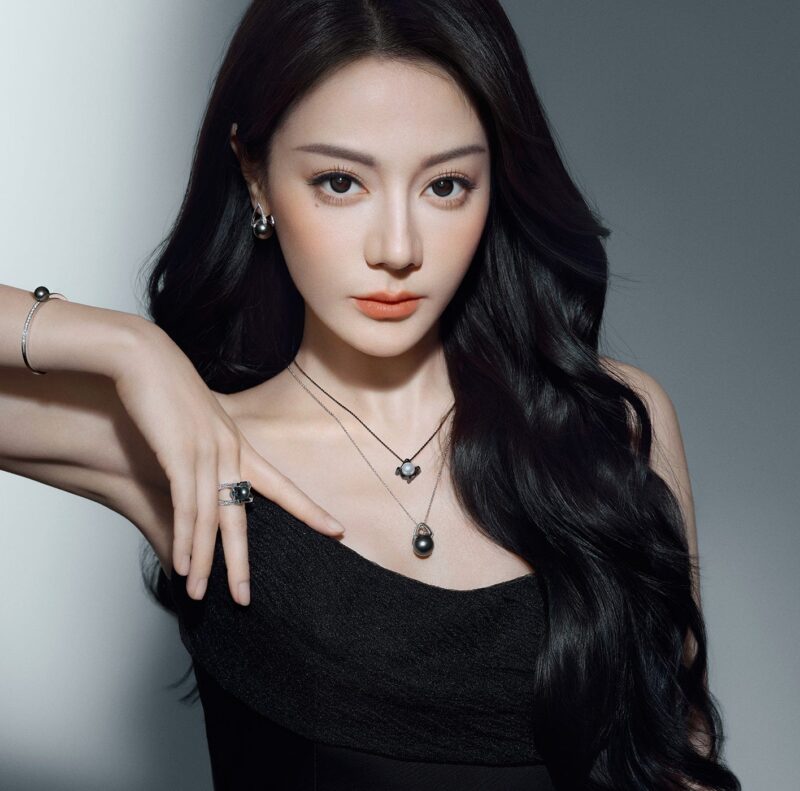
Dilraba in Mikimoto’s M Collection campaign. A contemporary jewellery image, rather than a bridal campaign. Courtesy of Mikimoto.
Explore the story
Against a black dress, the pearls in Mikimoto's photograph of Dilraba look strikingly contemporary. Their rounded surfaces meet the sharp geometry of the M motif, and the dark palette lets the jewellery draw its own outline. It is a campaign image, but it opens an appealing possibility for bridal dressing: a pearl can bring character to a look as confidently as it brings softness.
The pearl meets a sharp line
01 / 02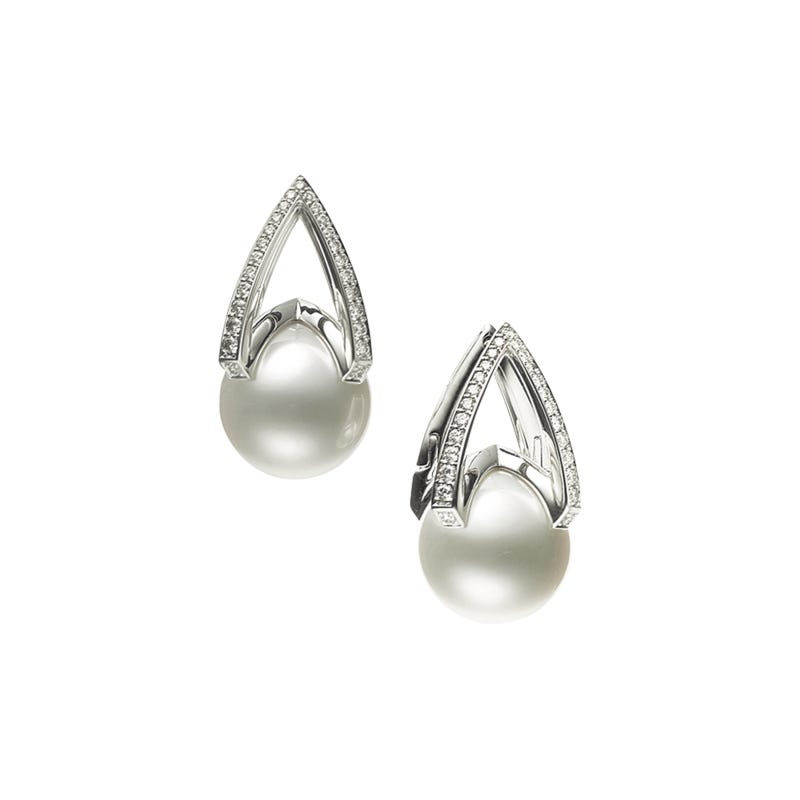
White South Sea cultured pearl earrings: 11mm pearls, 0.30ct of diamonds and 18-carat white gold. Courtesy of Mikimoto.
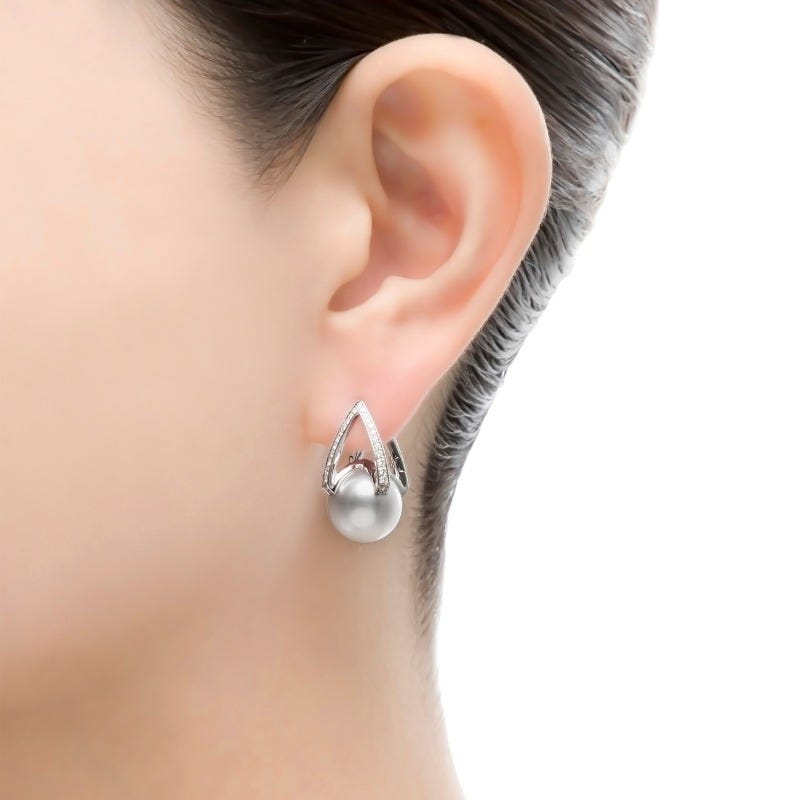
The house’s worn view restores the earring to the scale of the ear and jaw. Courtesy of Mikimoto.
Mikimoto takes the first letter of its name as the starting point for M Collection. That small piece of geometry changes the surrounding pearl. A round form hangs beside angled gold; a quiet surface meets a precise edge. In the collection's panoramic photograph, the same idea moves between pendants, earrings and rings without making each jewel identical.
For a wedding, that offers a useful kind of continuity. You can carry one graphic idea through the look while deciding where it should become most visible. At the ears, the M frames the face. As a pendant, it draws the eye down towards a single pearl. On the hand, it becomes a small sculptural setting that you see with every gesture.
The attraction lies in that encounter of forms. Pearls have an immediately recognisable roundness, so the angular motif has something definite to answer. The resulting jewel can feel composed beside a simple dress or a sharply cut jacket. It also leaves the wearer free to choose a single piece, allowing the design to register clearly without assembling a complete suite.
White pearls, close to the face
The white South Sea cultured pearl earrings place a pearl beneath a diamond-set upper element in 18-carat white gold. Mikimoto lists 11mm pearls and a diamond weight of 0.30 carat for the pair. The still photograph reveals the compact construction; the worn photograph shows where that construction sits in relation to the ear and jaw.
That change of scale is revealing. The pearl becomes a distinct point near the face, while the angular section holds a little light above it. The composition has enough separation for the two forms to remain legible. In a portrait, the eye can read the pearl first and discover the setting as it moves closer.
A bride considering these earrings could begin with the face and neckline together. An open neck may give the drop ample space; a higher collar can make the same pearl feel like a concentrated punctuation beside the face. Bring the chosen hairstyle into the comparison as well. The question is where you want the jewel to be seen, and how much of its outline you want to leave exposed.
A pendant or a ring changes the centre
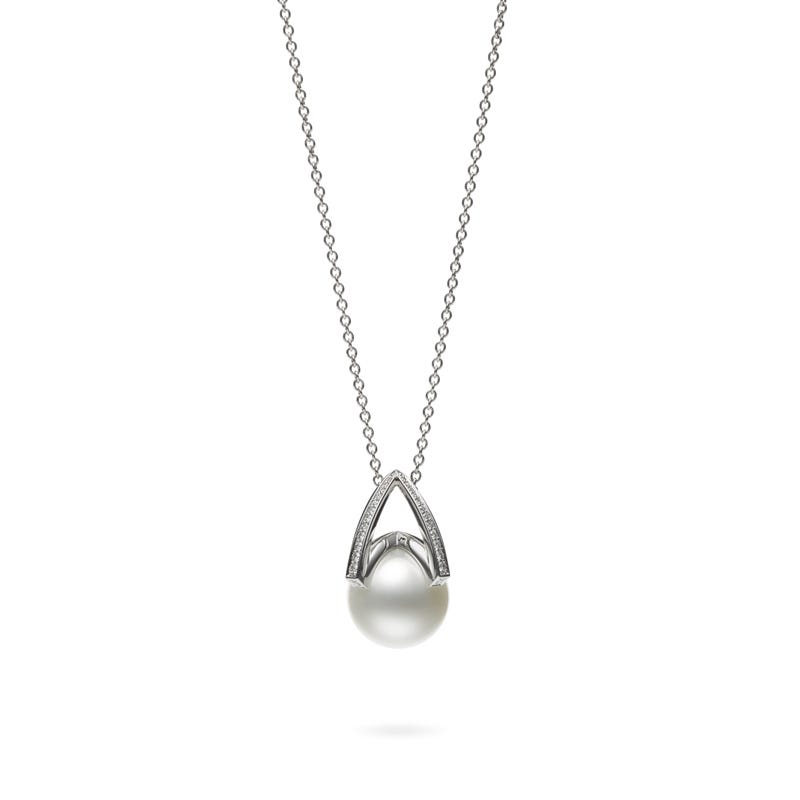
The white South Sea pendant places a 12mm pearl below a diamond-set graphic element. Courtesy of Mikimoto.
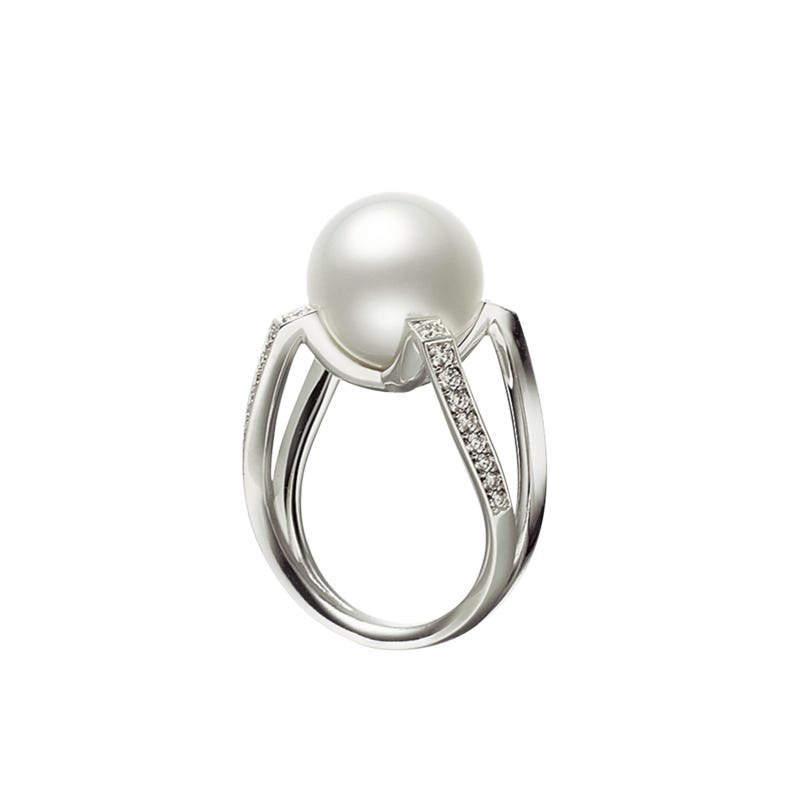
The ring gives the same 12mm pearl format a different setting: on the hand, with 0.46ct of diamonds. Courtesy of Mikimoto.
The corresponding white South Sea cultured pearl pendant makes the pearl a focal point at the neck. Its official specification lists a 12mm pearl, diamonds totalling 0.25 carat and 18-carat white gold. The geometry sits above the pearl, turning the meeting of chain and drop into a visible part of the design.
That arrangement asks for a different kind of space from the earrings. A pendant occupies the centre of the body rather than its edge. Let it sit against the actual fabric or bare neckline you intend to wear, then judge the chain length and the pearl's position together. A beautifully proportioned jewel can change character with a small shift in where it falls.
The white South Sea cultured pearl ring brings the same language to the hand. Mikimoto specifies a 12mm pearl with 0.46 carat of diamonds in 18-carat white gold. Here the pearl becomes a raised centre, and the setting gives the eye an angular route around it. It is a strong possibility for someone who wants the pearl to enter the picture through gesture.
Choosing a ring as the principal pearl also leaves the neck free. That can be particularly appealing when the dress already has a carefully drawn neckline. Let one part of the look carry the volume, then consider how much additional light the earrings need. The most memorable arrangement may be surprisingly economical.
A warmer register
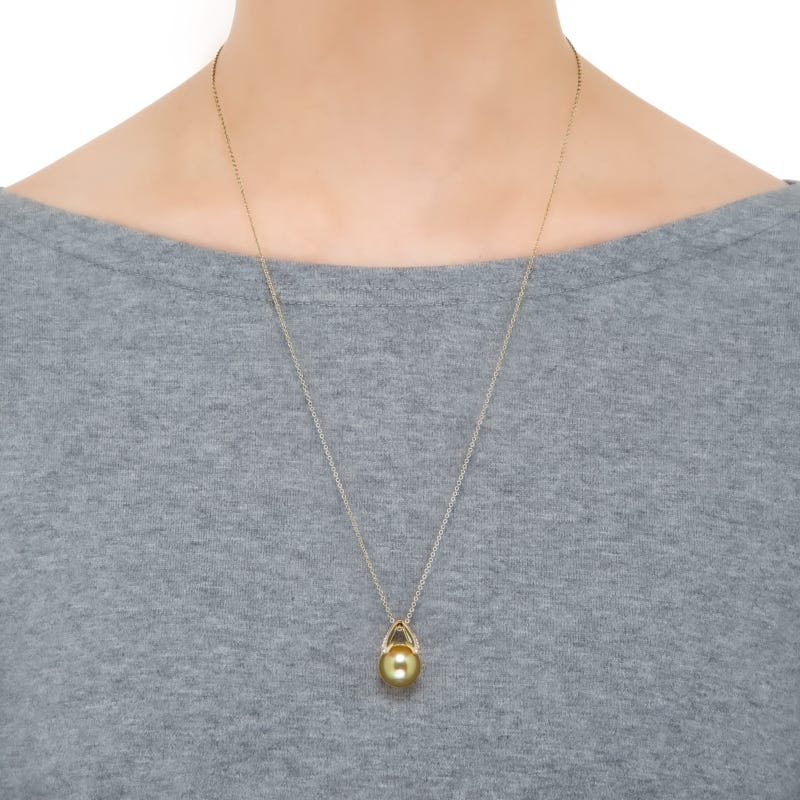
A golden South Sea pendant in the house’s M edit: warmth becomes part of the composition. Courtesy of Mikimoto.
The golden South Sea cultured pearl pendant introduces a different colour relationship. In Mikimoto's worn image, the warm pearl and yellow gold read together against the skin. The design remains recognisably M, yet the overall impression changes because colour now joins outline as a source of interest.
That is a compelling option beside ivory fabric, a warmer complexion or simply an existing collection of yellow-gold pieces. These are visual starting points rather than fixed rules: compare the jewel with your own clothes and jewellery. The aim is to see whether the warm pearl feels like a natural continuation of what you already choose to wear.
The golden image also reminds us that pearl jewellery can have a life beyond white. A wedding piece might first appear with a pale dress and later accompany a black shirt or a soft knit. The graphic setting gives that later context something clear to hold on to. The jewel can keep its identity as the clothes around it change.
Begin with the image you want to keep
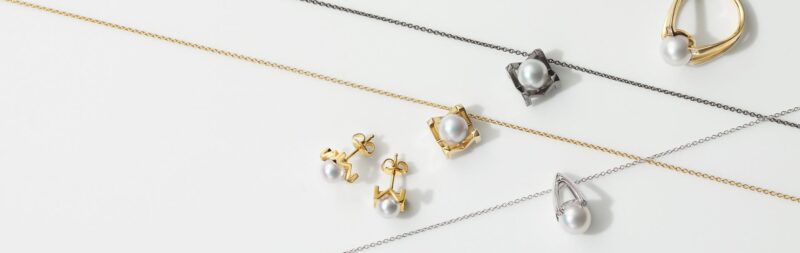
The broader M Collection vocabulary, shown in an intentional panoramic arrangement. Courtesy of Mikimoto.
Dilraba's campaign portrait is useful because it lets pearls inhabit a confident, darker atmosphere. The white South Sea close views offer another reading: bright surfaces, small diamonds and a precise white-gold frame. The golden pendant supplies a third, driven by warmth. Each belongs to the same collection, but each suggests a different finished picture.
For the ceremony, begin with the picture that feels closest to you. Choose whether the face, neck or hand should hold the pearl, then bring the other jewels into the frame slowly. Look for a relationship between their shapes as well as their materials. An angular setting and a rounded pearl already contain a conversation; they deserve room to be seen.
M Collection is presented by Mikimoto as contemporary jewellery, and its bridal possibilities follow from that design. The appeal is a pearl chosen for its own form and presence, able to belong to the wedding day and to the person who will wear it afterwards. That makes the final question beautifully specific: where would you most like to see that pearl, when the day has become a photograph?
Sources & further reading
The Edit
Jewelry stories
Selected stories from the same editorial universe.
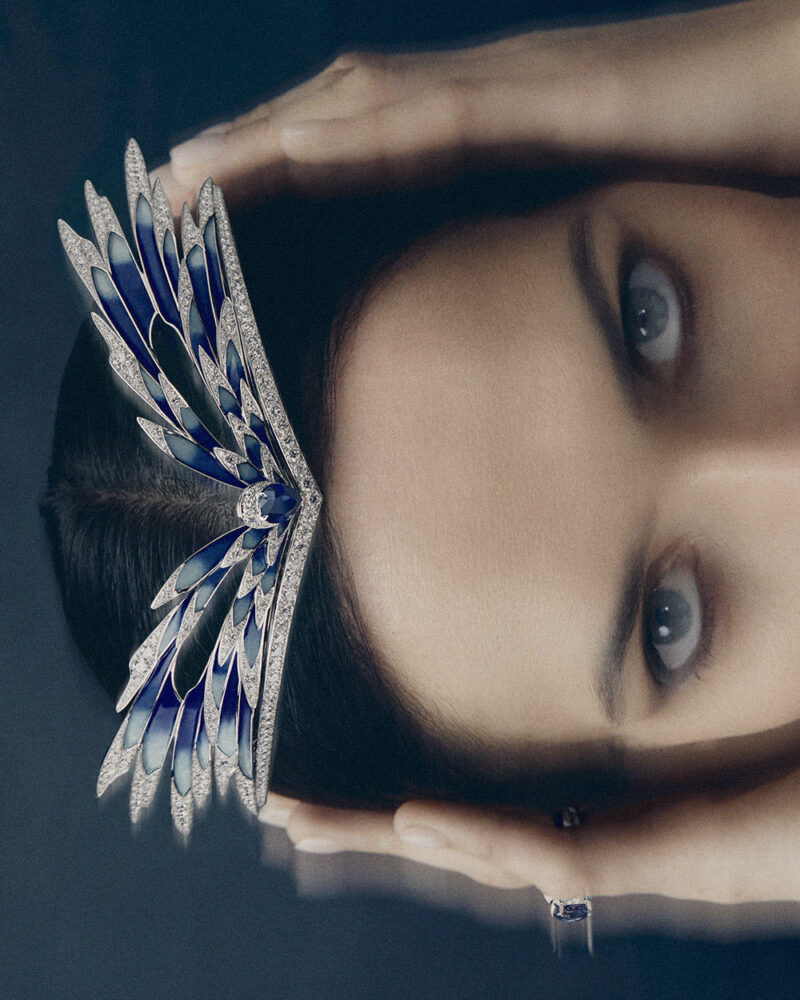
Chaumet Envol: A Tiara in Motion
Blue wings move from hair to face and cloth. Chaumet’s Envol invites a bridal
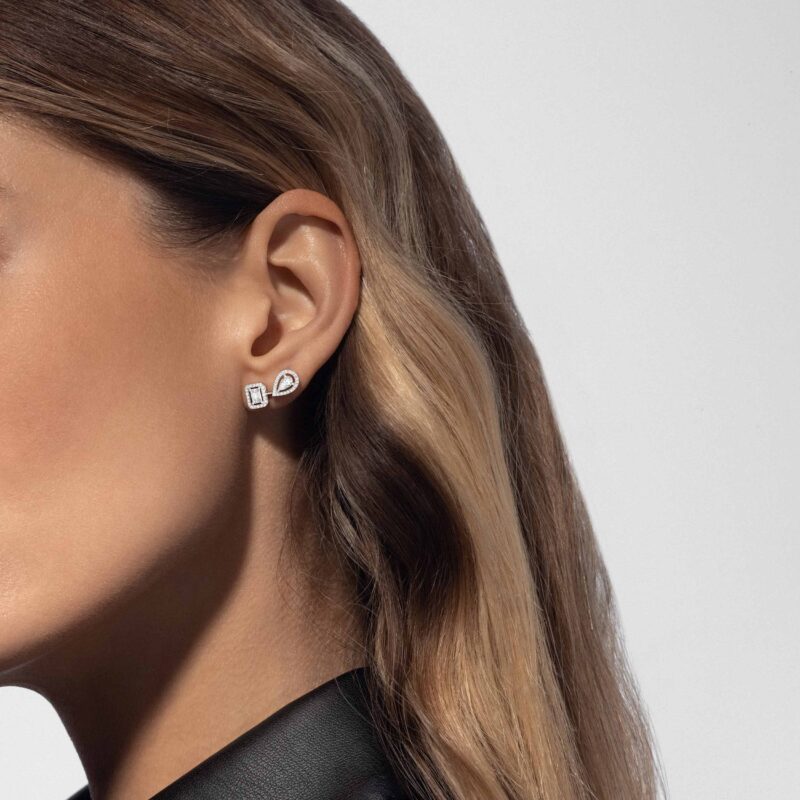
Messika My Twin: Two Cuts, One Bridal Look
An emerald cut, a pear and an unequal pair: the small asymmetry of Messika
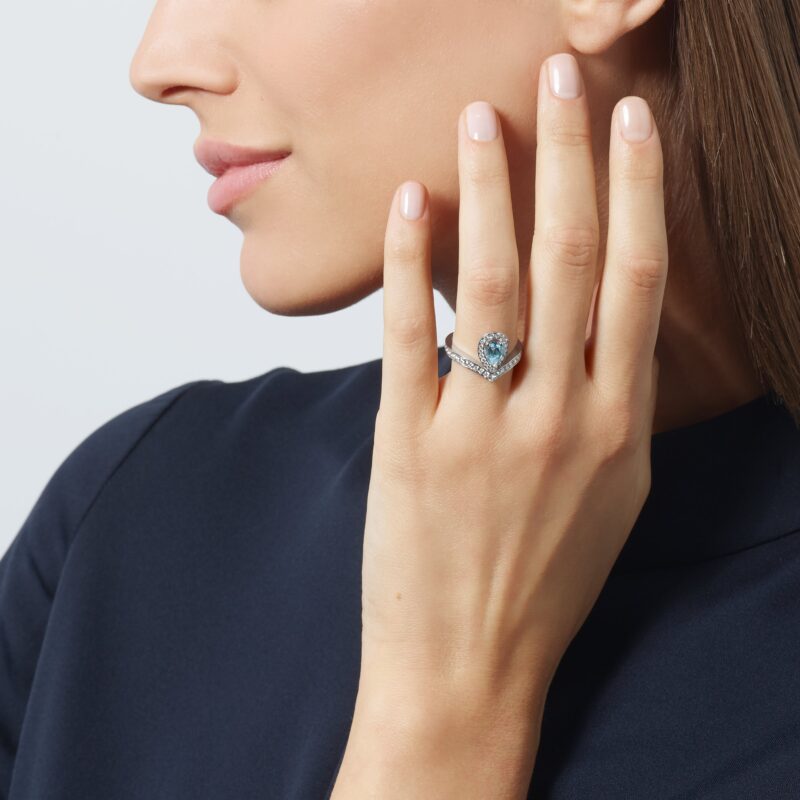
Chaumet Joséphine: Something Blue, Chosen Your Way
An aquamarine beside the face, a sapphire at the centre of a solitaire: Chaumet
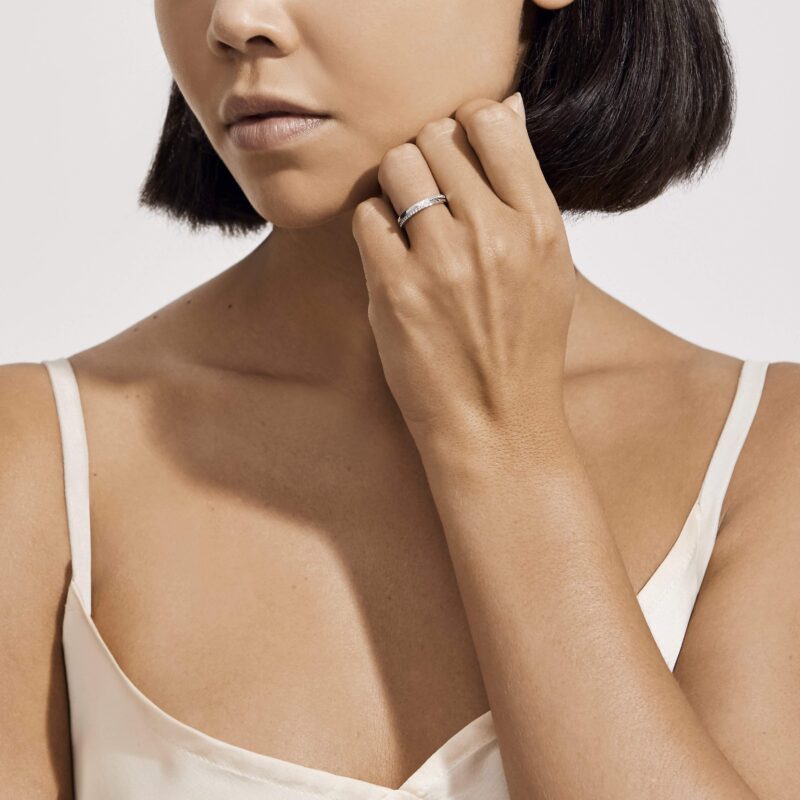
Two Rings, Two People: A De Beers Wedding-Band Edit
A rose-gold court profile, a single diamond in platinum, a fine eternity line or
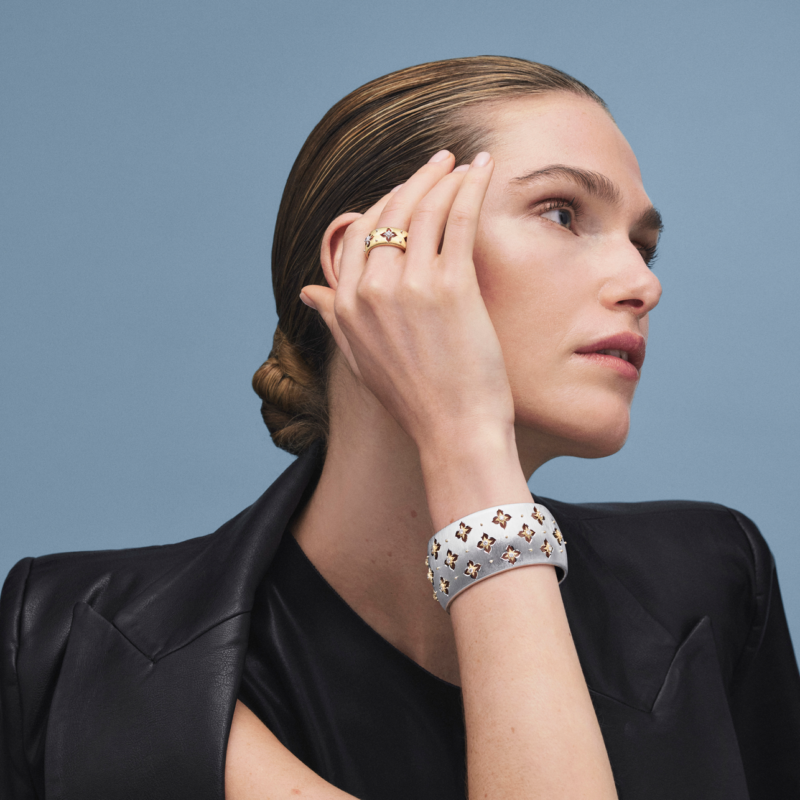
Buccellati Macri Giglio: Gold with a Grain
On the wrist, Buccellati Macri Giglio becomes a broad field of engraved gold. A
Norman Silverman Bridal: A Ring with Presence
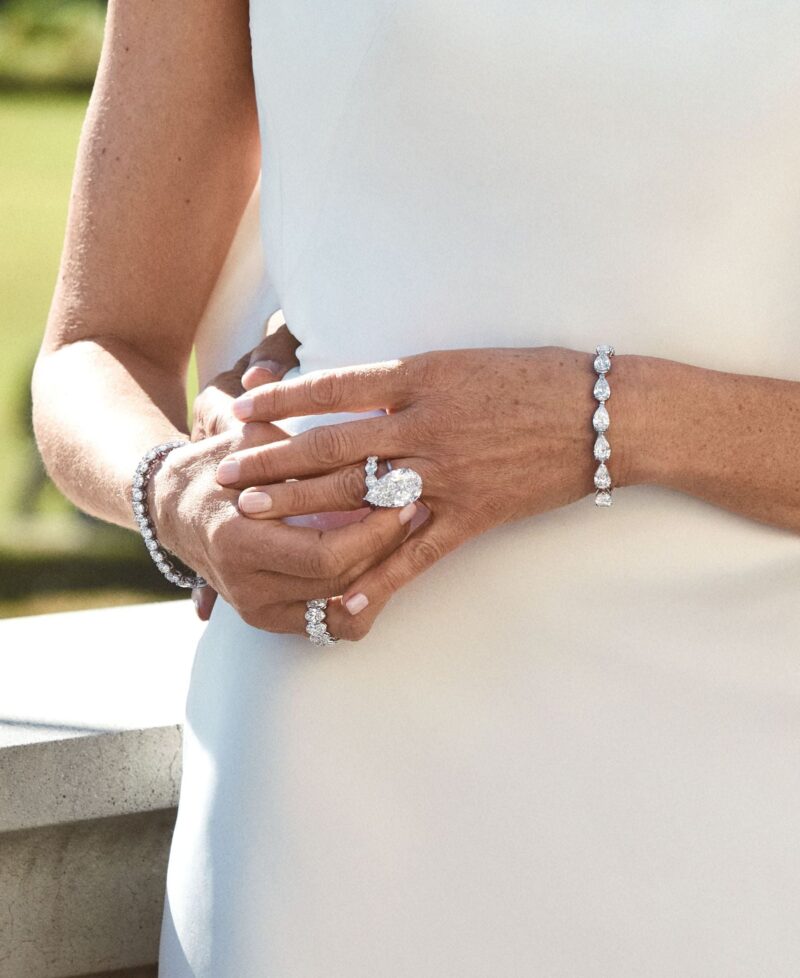
A pear solitaire on the hand, a radiant seen in profile and an emerald-cut