
TheTimeo / Jewelry
A ring with
presence.
A pear solitaire on the hand, a radiant seen in profile and an emerald-cut alternative: Norman Silverman bridal, read through the shape of the ring.
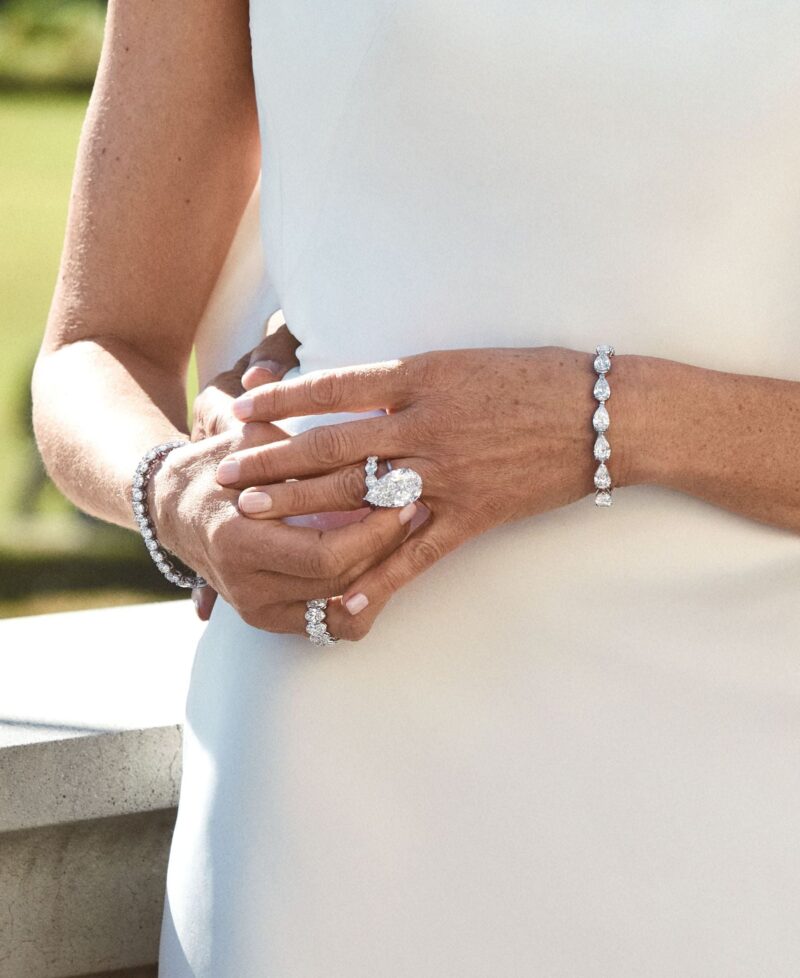
The pear solitaire in the house’s Forever, Reimagined edit: a directional outline seen on the hand. Courtesy of Norman Silverman.
Explore the story
The hand makes the first argument. In Norman Silverman's bridal photograph, a pear-shaped diamond sits against white fabric, its point directing the eye along the finger. The ring has considerable presence, yet the gesture stays relaxed. That relationship between an emphatic stone and an ordinary movement is the most interesting part of the house's Forever, Reimagined edit.
A stone with a direction
01 / 02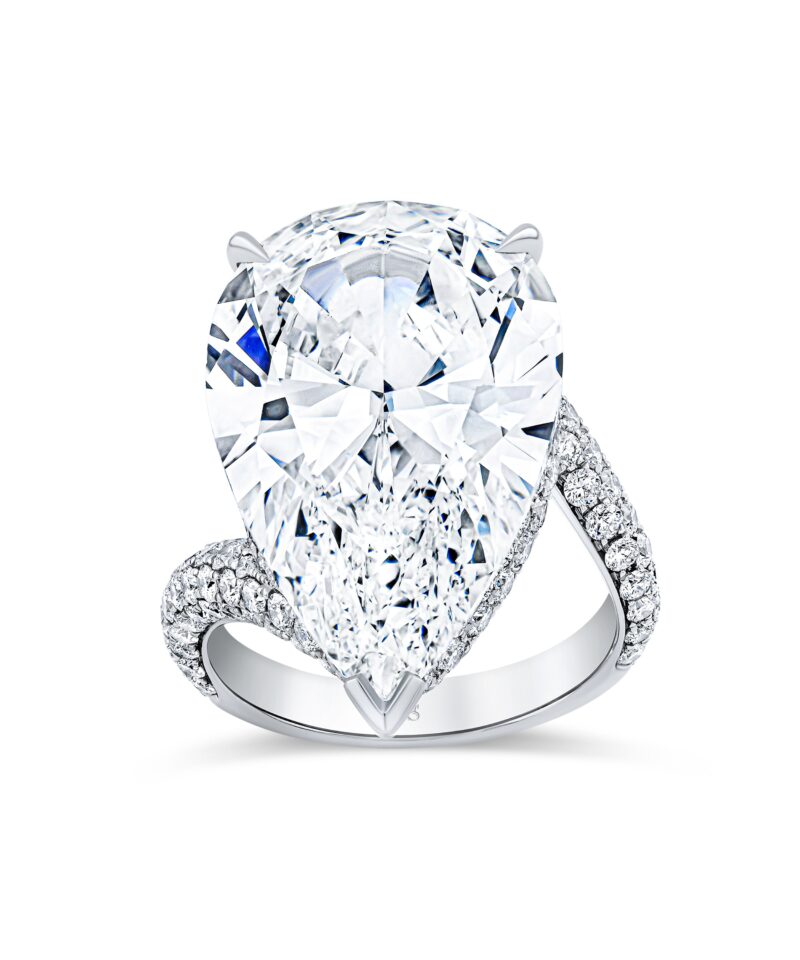
The pear solitaire from the worn opening, now seen close: a pear-shaped centre above a diamond-set platinum band. Courtesy of Norman Silverman.
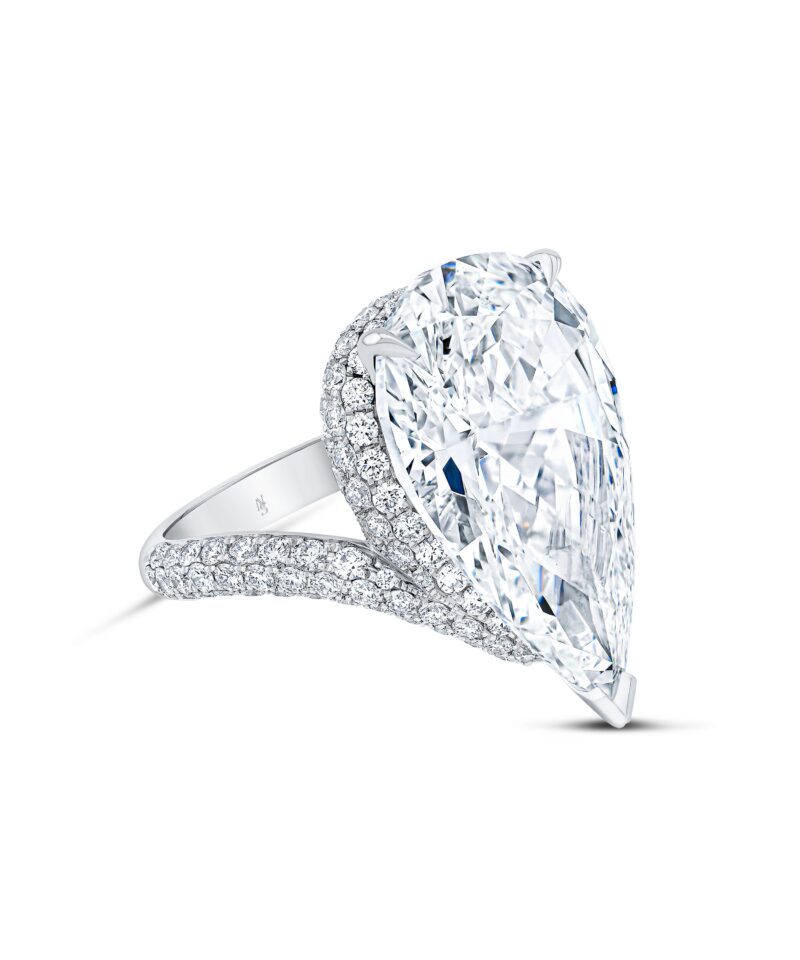
The same pear solitaire in profile reveals the raised setting and the pavé band. Courtesy of Norman Silverman.
The pear solitaire has a recognisable silhouette even before the facets become legible. One end gathers into a point; the other remains rounded. In the worn photograph, that asymmetry gives the jewel a direction, while the pavé diamond band carries a finer line of light beneath it. The white dress supplies a soft background rather than another competing pattern.
This is a useful way to look at a large engagement ring. Begin at the distance at which another person would see it. Follow the outline across the hand, then move closer to the setting. A stone can occupy a substantial part of the finger and still belong to the whole composition. The worn view allows that judgement in a way that a carat figure cannot.
Norman Silverman places solitaires beside eternity bands in Forever, Reimagined. The relationship is visible: one shape leads, a repeated sequence supports it. The photographs invite the eye to move between a single centre and a continuous diamond line. Each has a separate role, so choosing the band becomes an opportunity to compose the hand as well as mark an occasion.
The radiant, seen from two sides
01 / 02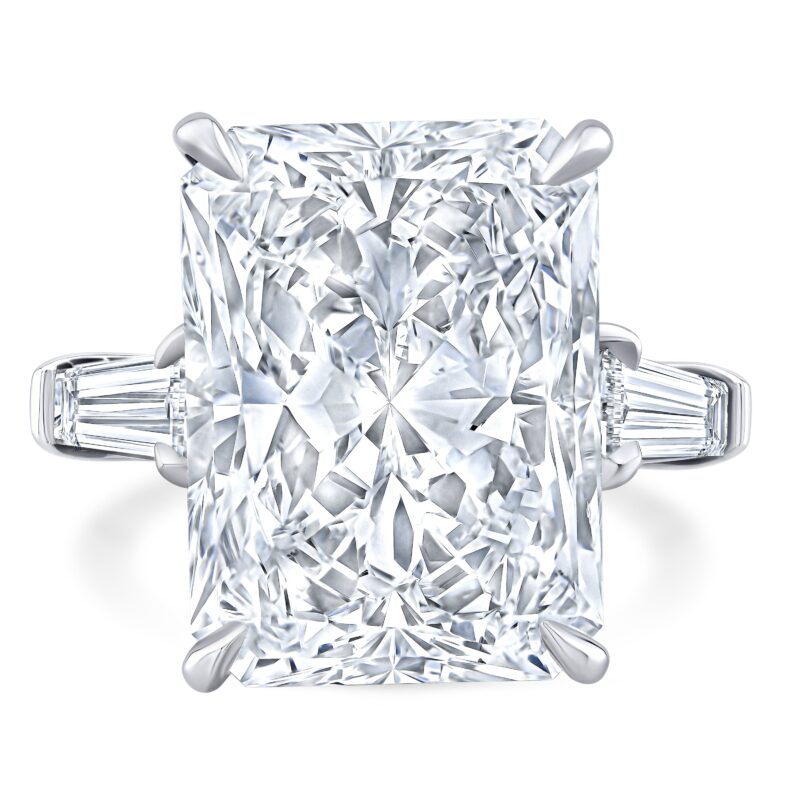
Radiant Diamond Three-Stone Ring: tapered baguette sides lead towards the rectangular centre. Courtesy of Norman Silverman.
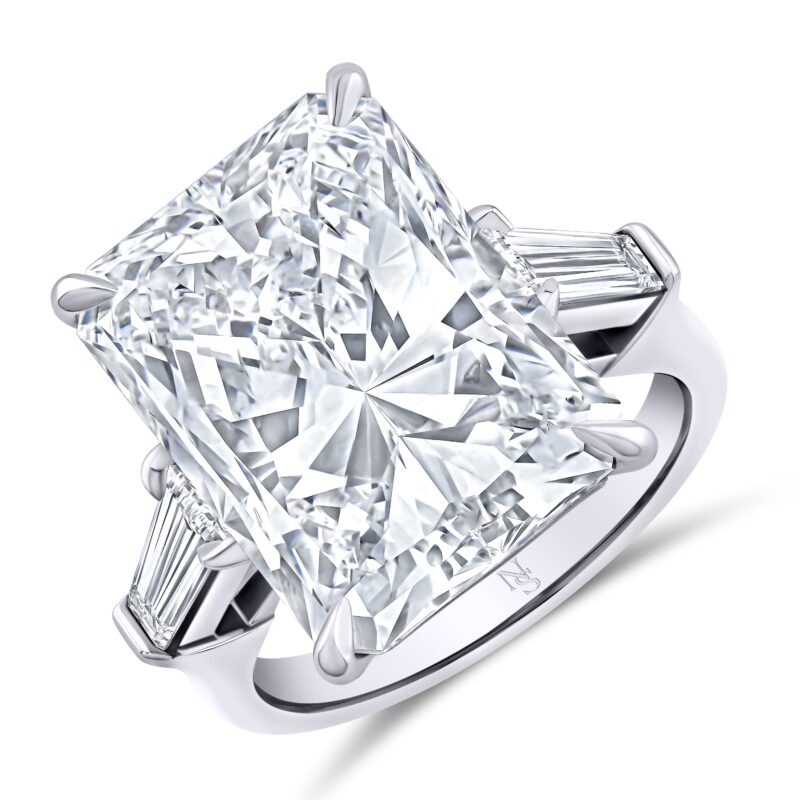
A second angle of the same radiant ring reveals the raised mounting and the side-stone junctions. Courtesy of Norman Silverman.
The Radiant Diamond Three-Stone Ring takes a different route. Its rectangular centre is flanked by tapered baguette side stones, with a platinum mounting beneath. Viewed from the front, the smaller stones lead towards the centre through narrowing, straight edges. The composition feels broad across the finger, with the principal diamond held clearly at its centre.
The house describes this example as a 12.02-carat radiant three-stone ring. The photograph gives the number a design context: the important relationship is between the centre's width, the tapered sides and the shank. A frontal view makes that relationship easy to read. The second angle reveals how the raised setting is supported and how the side stones meet it.
Looking between those two views changes the question. The ring becomes a small piece of architecture, with a top, a profile and spaces beneath the diamonds. That is where an appointment becomes valuable: turn the actual ring, let the hand rest, and see whether the profile has the same appeal as the view that first caught your attention. Photographs can introduce that structure; the particular ring deserves the final look.
An emerald-cut alternative
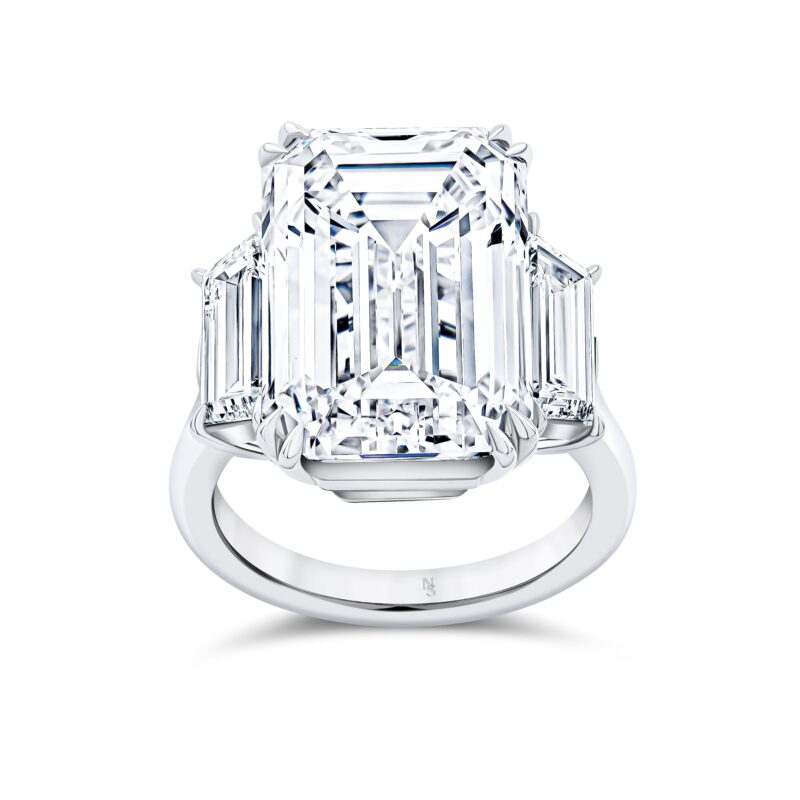
A different ring: the emerald-cut example lists a 15.03ct centre and 1.91ct of trapezoid side diamonds. Courtesy of Norman Silverman.
The Emerald Cut Diamond Three-Stone Ring makes the side stones more angular. Norman Silverman specifies a 15.03-carat emerald-cut centre and 1.91 carats of trapezoid-shaped side diamonds for the example shown. The trapezoids widen towards the centre, giving the setting a clear progression across its three principal elements.
The difference from the radiant is visible before comparing weights. Here, long straight boundaries and clipped corners establish the drawing. The eye can trace an outline, pause at a junction and continue across the next stone. The side diamonds appear as deliberate parts of that drawing, rather than simply a border around the largest element.
For someone choosing between them, the distinction can be surprisingly immediate. Does the radiant's compact field of light appeal first, or the emerald-cut ring's measured geometry? Put both images at a similar scale and let each hold the frame on its own. The comparison becomes clearer when the decision begins with the shape you want to see on your hand.
What the band brings
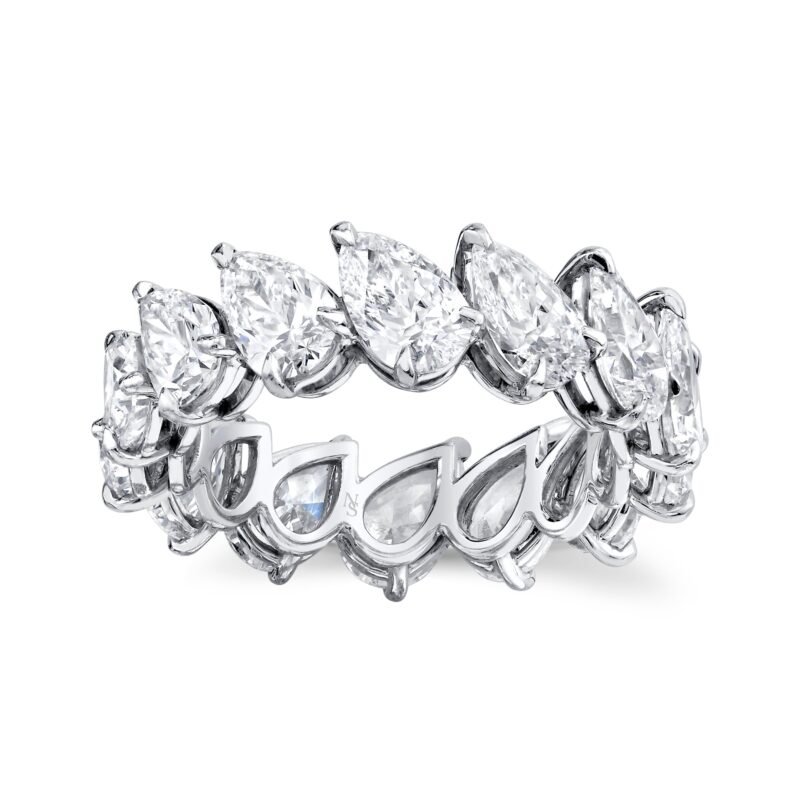
The pear-diamond eternity band, shown in the bridal edit, makes a repeating sequence of rounded ends and points. Courtesy of Norman Silverman.
The pear-diamond eternity band has a different kind of energy. A succession of pointed and rounded outlines carries the design around the finger. In the product photograph, the slanted arrangement, individual settings and spaces between them become part of its character. It is a complete diamond composition, capable of attracting attention independently of an engagement ring.
That matters when imagining a pair. A solitaire establishes a single point of emphasis; an eternity band introduces repetition. Together they can give the hand both a centre and a rhythm. Worn separately, they offer two distinct ways of carrying diamonds into the day. The band is therefore worth choosing with the same attention given to the engagement ring.
The most persuasive combination may leave a visible interval between the two designs. It may also bring them closer together. The shape and height of the actual settings determine that relationship, so ask to see the intended pair together. A photograph of one ring should begin that conversation rather than quietly stand in for a fitted combination.
Leave room for the person
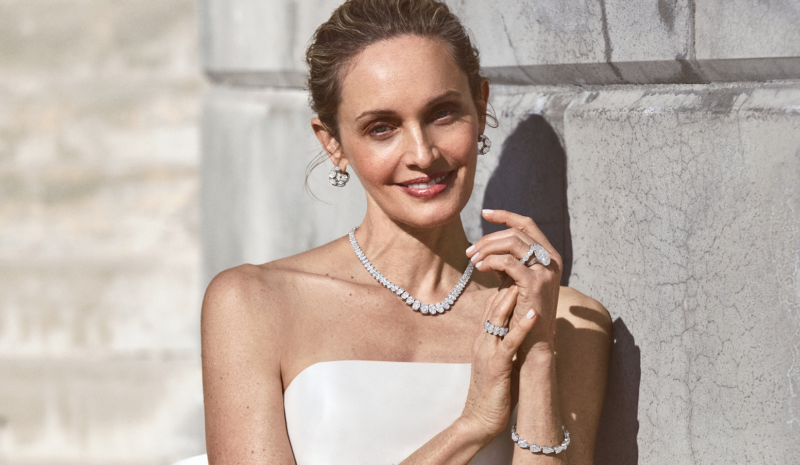
The wider Forever, Reimagined campaign places jewellery within dress, gesture and daylight. Courtesy of Norman Silverman.
The wider bridal photograph returns the jewels to the setting of a person, a dress and daylight. It offers a welcome change of scale after the close views. The object is still the reason to look, but it becomes part of a larger image: fabric falls, hands move, and the outline of a ring appears within that movement.
This is the appeal of Norman Silverman's edit for a bride who enjoys a decisive jewel. The ring can make its presence known while the rest of the look stays easy. A clean neckline, an uncluttered hand or a quiet sleeve can each give it space. Those are possibilities to try, guided by the particular clothes and pieces you already love.
Begin with the worn pear, then return to the radiant and emerald-cut three-stone rings. Notice which outline remains in mind after the image has gone. That is a stronger starting point than building a wish list around the largest number. The lasting choice is a ring whose drawing you keep wanting to see, close up and at the end of your own hand.
Sources & further reading
The Edit
Jewelry stories
Selected stories from the same editorial universe.
Chaumet Envol: A Tiara in Motion
Blue wings move from hair to face and cloth. Chaumet’s Envol invites a bridal
Messika My Twin: Two Cuts, One Bridal Look
An emerald cut, a pear and an unequal pair: the small asymmetry of Messika
Chaumet Joséphine: Something Blue, Chosen Your Way
An aquamarine beside the face, a sapphire at the centre of a solitaire: Chaumet
Two Rings, Two People: A De Beers Wedding-Band Edit
A rose-gold court profile, a single diamond in platinum, a fine eternity line or
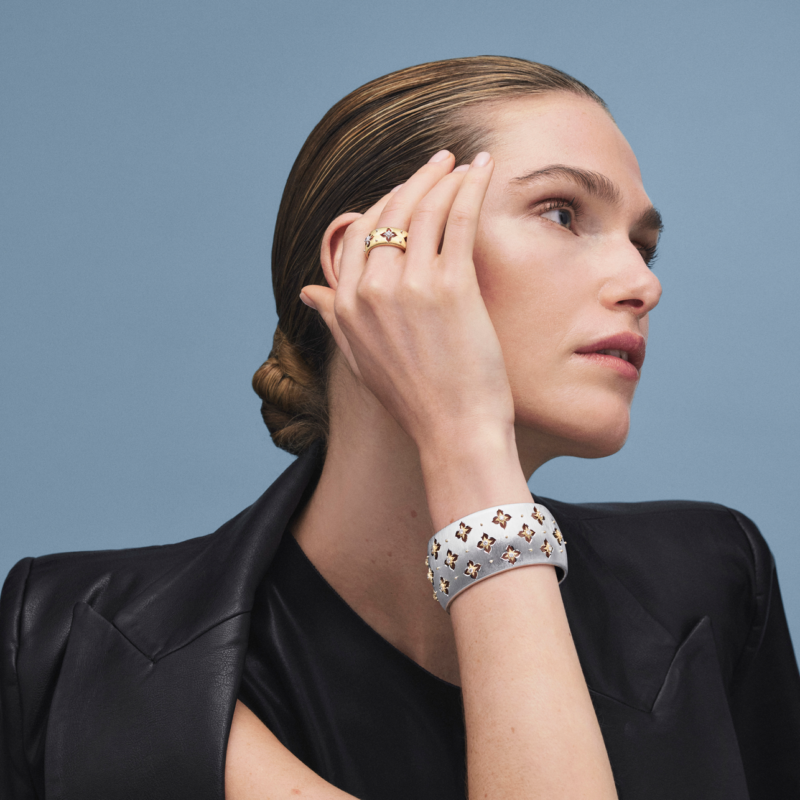
Buccellati Macri Giglio: Gold with a Grain
On the wrist, Buccellati Macri Giglio becomes a broad field of engraved gold. A

Mikimoto M: A Pearl with a Graphic Edge
White South Sea pearls, golden warmth and a sharply drawn setting: Mikimoto M offers