
TheTimeo / Bridal
Van Cleef & Arpels Perlée:
a golden thread
A small gold bead connects rings, bracelets and secret watches. Perlée offers a way to compose bridal jewellery through rhythm, proportion and a touch of colour.
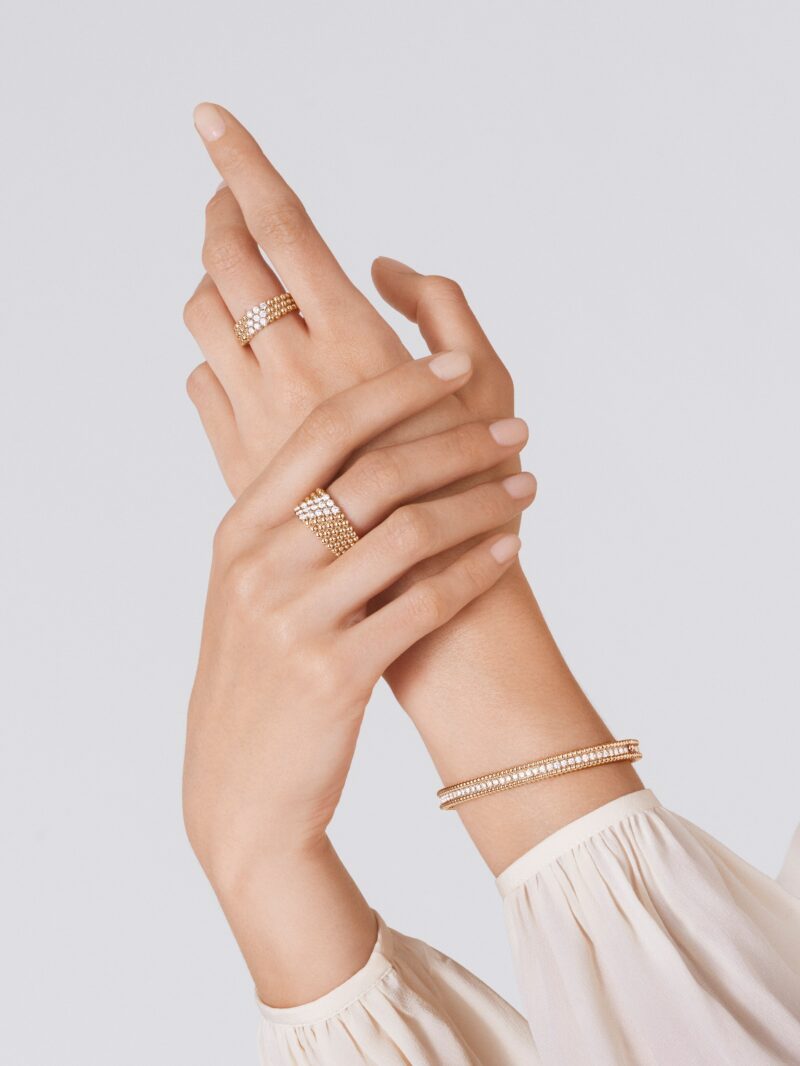
The beaded motif repeated at the fingers and wrist. Courtesy of Van Cleef & Arpels.
Explore the story
A line of small golden spheres can give a bracelet more character than a much larger motif. In Van Cleef & Arpels’ Perlée, each bead catches a small highlight, then gives way to the next. Seen together, they make a moving border around a finger or wrist. The effect is especially clear against a pale sleeve, where the repeated curves remain easy to follow.
For bridal dressing, that repetition offers a useful freedom. You can connect several pieces through a shared detail while allowing their width, surface and colour to differ. The photographs here move from a ring to a wrist, then to a secret watch: three scales of the same visual idea. The bridal interpretation is ours; the collection extends well beyond a wedding.
One bead becomes a surface
01 / 02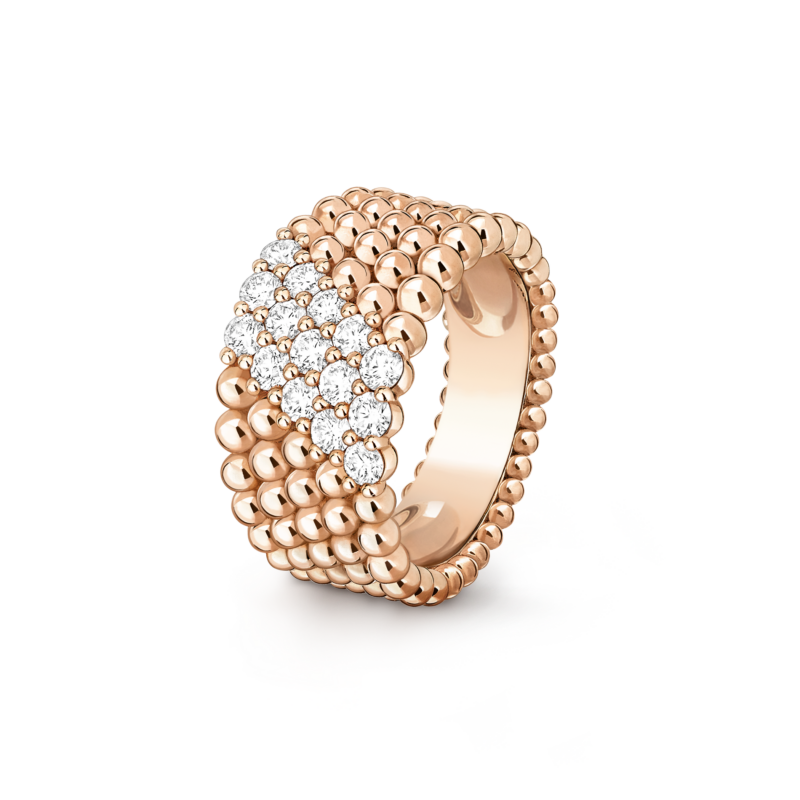
Rows of rounded beads build the ring’s surface and its outer edges. Courtesy of Van Cleef & Arpels.
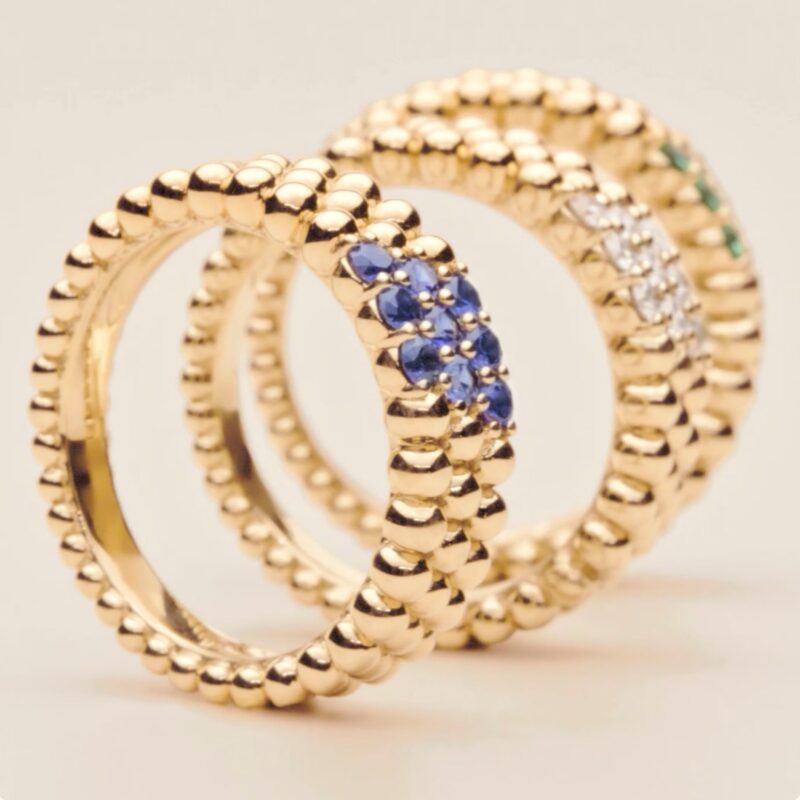
Different central surfaces share a border of rounded gold beads. Courtesy of Van Cleef & Arpels.
In the close view of the rose-toned ring, the beads form several rows. A brighter middle line interrupts their rounded surfaces, and the outer rows give the ring a softly scalloped edge. The motif is doing two jobs at once: building the volume and finishing its outline.
That combination is what makes the detail worth enlarging. Follow one row towards the side and the small spheres remain distinct; pull back and they merge into the broad curve of a band. You can enjoy the ring as a single shape or as a sequence of carefully repeated elements.
The group of three rings introduces another possibility: a coloured central line bordered by beads. The blue, clear and green surfaces in that photograph change the character of the middle row while the edges keep a recognisable rhythm. The shared detail gives different versions a visible connection.
The view also suggests a way to judge a wider ring. Look at how much of the finger it occupies and where its edges fall. A close photograph explains the surface, while a worn photograph restores the proportions that will matter in your own arrangement.
A motif with a longer memory
Van Cleef & Arpels traces the golden bead in its jewellery to decorative details of the 1920s, and describes it as an independent motif by 1948. The Perlée collection followed in 2008. That history gives the repeated sphere a context without asking every contemporary piece to look like an archival jewel.
In these photographs, the bead can act as an edge, a complete band or a frame around a different surface. The recognisable element remains small. Its scale allows a narrow bracelet and a more substantial ring to share a family resemblance while retaining different proportions.
That is a useful distinction when building a bridal look. Repeating an entire motif can create a strong theme; repeating a small detail gives you a quieter connection. You might choose one piece with greater presence and let a finer line elsewhere echo it. The eye finds a relationship without needing every jewel to make the same gesture.
The wrist and the hand
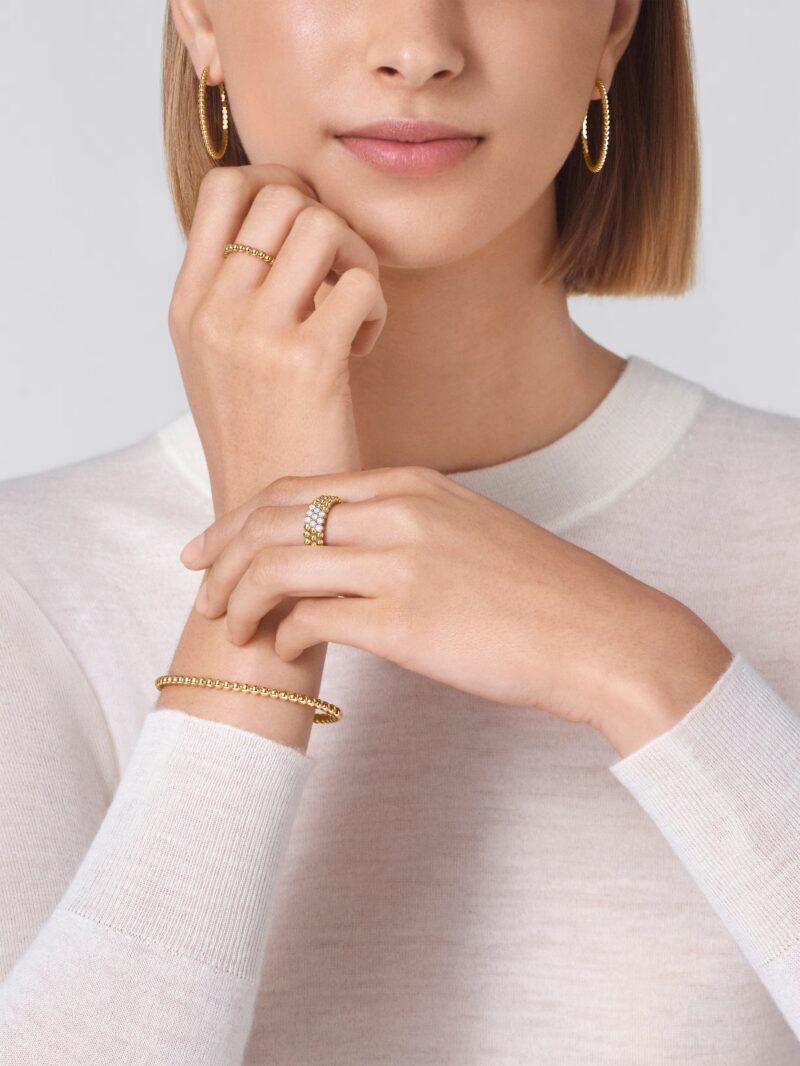
Different scales, connected by a repeated rounded detail. Courtesy of Van Cleef & Arpels.
The worn view places a slender bracelet beside a broader ring and earrings. Their scales vary, but the rounded gold detail gives the arrangement continuity. The bracelet draws a fine line across the wrist, while the ring occupies a more concentrated area of the hand. Each gives the repeated curve a different proportion.
Start with the part of your look that already has the strongest shape. A detailed cuff, a sculpted neckline or an elaborate sleeve will change how you see jewellery beside it. A bare wrist creates another context. Try one principal piece first, then add the smaller echo and see whether the second line brings something you enjoy.
You may prefer a single ring, or find that a bracelet balances the hand. The point of the comparison is to make each addition intentional. When a small detail links the pieces, you can vary the scale without losing the thread.
A secret at the wrist
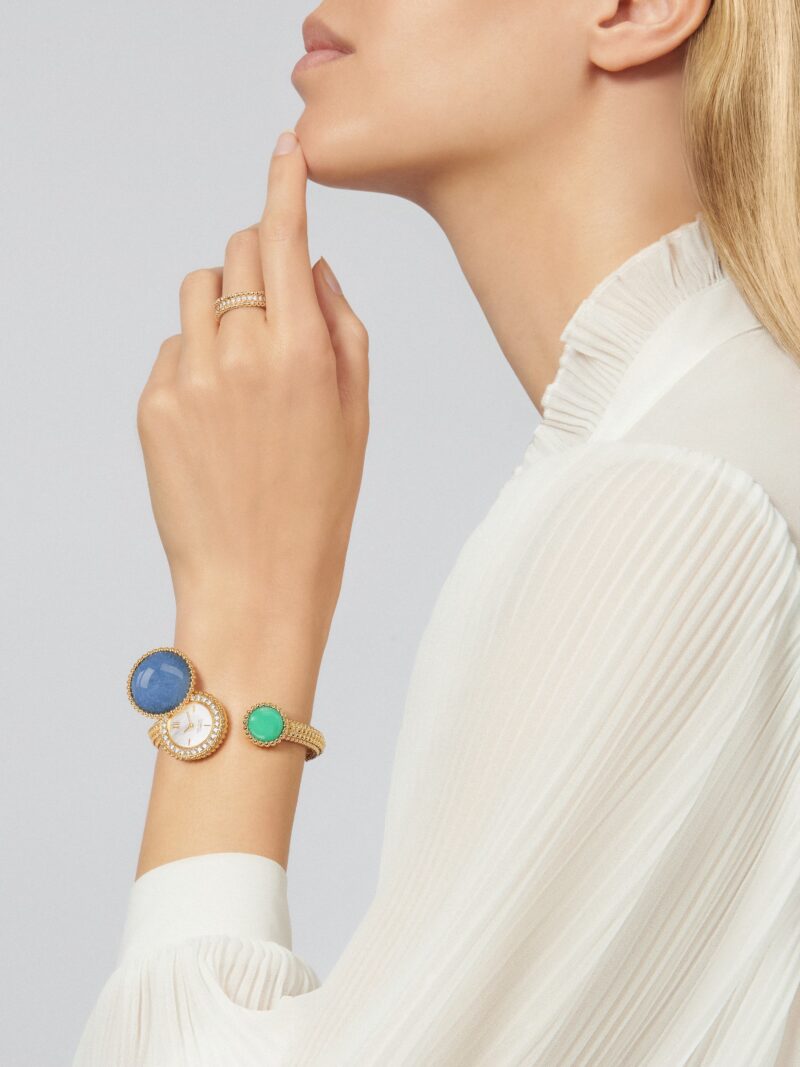
The secret watch at the scale of a wrist and sleeve. Courtesy of Van Cleef & Arpels.
The secret watch introduces another kind of contrast. In the worn photograph, blue and green circular forms sit beside a small visible dial. The group becomes part of a sleeve and hand, while the bead marks the perimeter of an object with several connected shapes.
Van Cleef & Arpels describes secret watches as jewels whose time display is concealed and then revealed. That idea adds a private action to a visible ornament. Here, the interest is in the relationship between the coloured circles, the small dial and the beaded bracelet. The timepiece gives the wrist an entirely different focal point from the rings seen earlier.
Against a pale outfit, the blue and green would introduce a distinct colour decision. You could let that be the principal accent and keep the surrounding jewellery restrained. Or you might prefer the gold and diamond surfaces elsewhere in the sequence. The collection offers several ways to carry a repeated curve through an outfit.
Keep the connection, change the scale
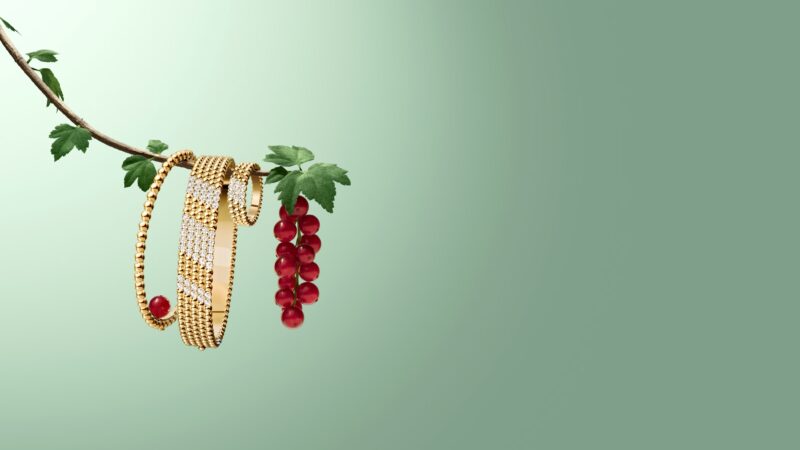
The collection seen through bracelets of different widths. Courtesy of Van Cleef & Arpels.
In the wider composition, bracelets hang from a branch against a green background. Removed from the hand, their circular shapes and beaded edges become the central subject. It is a useful final view because it makes the repeated detail easy to recognise across pieces of different widths.
Bring that recognition back to the clothes and jewellery you actually wear. A wedding may be the occasion for choosing a piece, while the combinations that follow will give it a wider life. Try the same ring with a shirt cuff, a fine knit or a favourite watch. Notice which part of the design continues to feel like yours.
The most convincing connection may be very small: a rounded edge repeated at the wrist, a line of gold beside a brighter surface, a colour that returns elsewhere. Perlée gives you that detail to work with. Build the rest of the look around the version of it you most want to keep seeing.
Sources & further reading
The Edit
Bridal stories
Selected stories from the same editorial universe.

Chaumet Envol: A Tiara in Motion
Blue wings move from hair to face and cloth. Chaumet’s Envol invites a bridal

Messika My Twin: Two Cuts, One Bridal Look
An emerald cut, a pear and an unequal pair: the small asymmetry of Messika
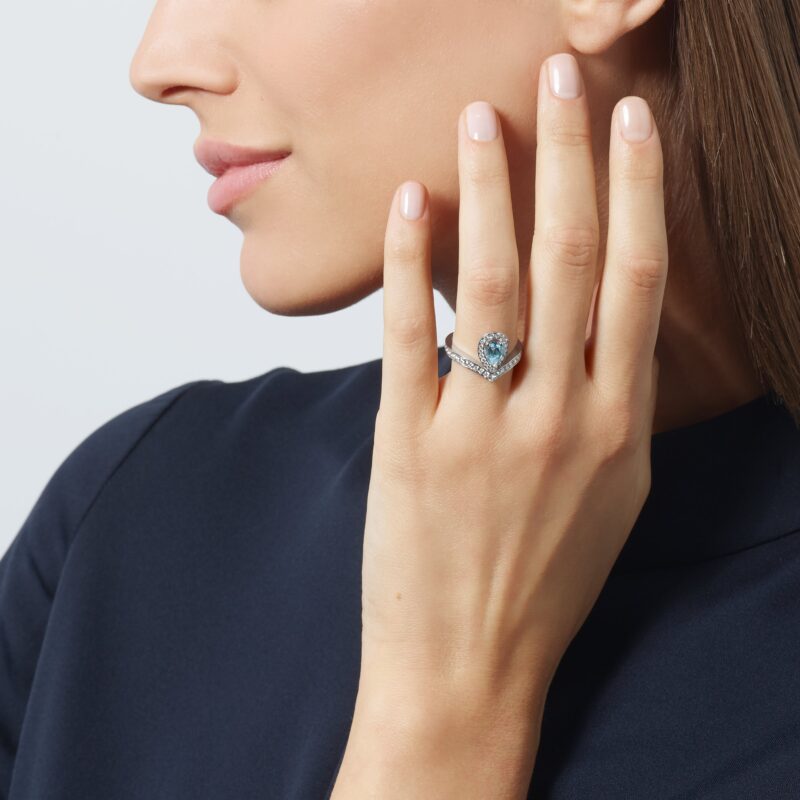
Chaumet Joséphine: Something Blue, Chosen Your Way
An aquamarine beside the face, a sapphire at the centre of a solitaire: Chaumet

Two Rings, Two People: A De Beers Wedding-Band Edit
A rose-gold court profile, a single diamond in platinum, a fine eternity line or

Buccellati Macri Giglio: Gold with a Grain
On the wrist, Buccellati Macri Giglio becomes a broad field of engraved gold. A

Mikimoto M: A Pearl with a Graphic Edge
White South Sea pearls, golden warmth and a sharply drawn setting: Mikimoto M offers